

This began with Imani’s desire to protect their idea: “Healthy inhabitation will heal the black body.” Even though they’d lost some hope in the belief that an idea could change the world, they now know they’d lost hope because they were missing praxis and a sense of embodied and relational safety.
We Design Spaces For
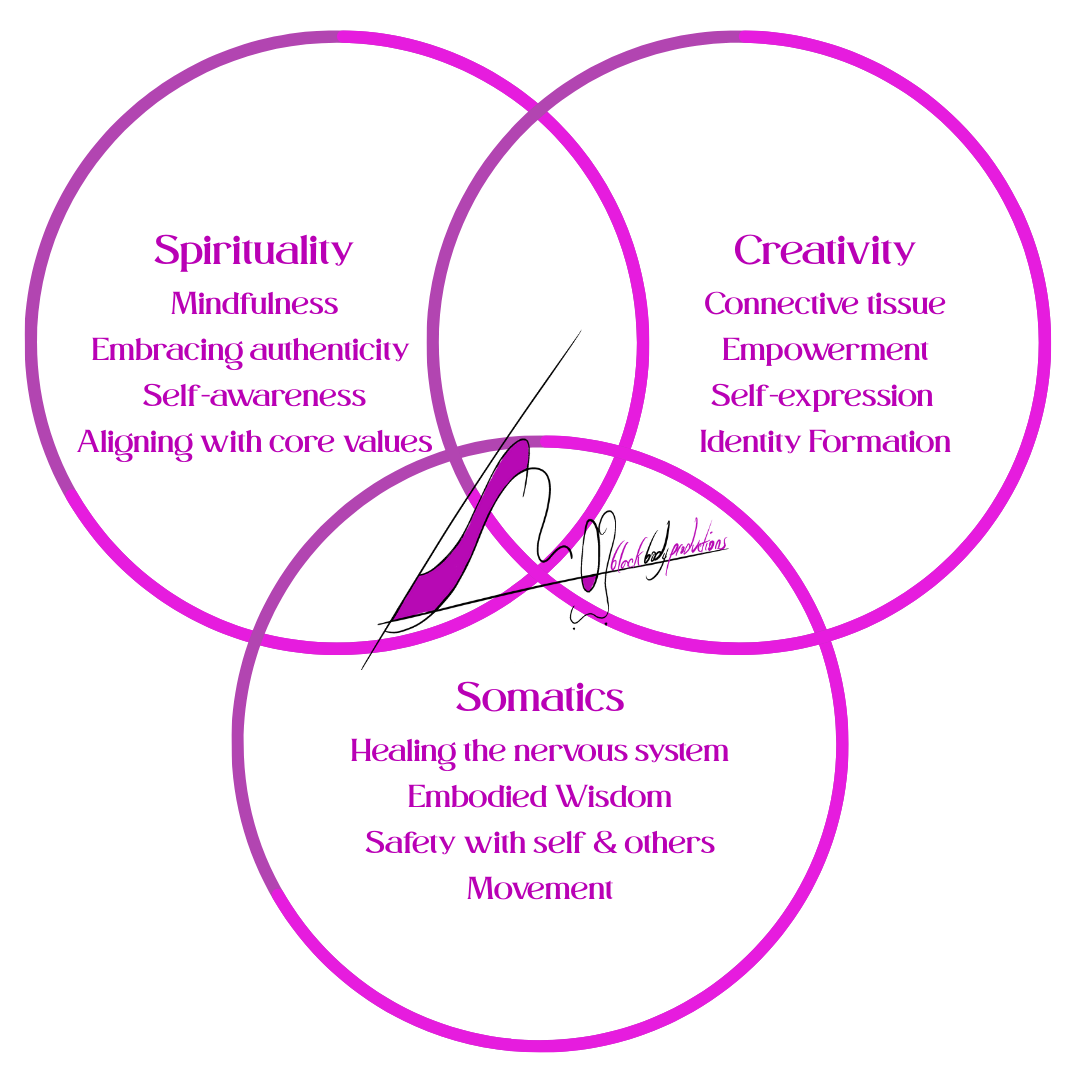
Communal nervous system regulation
Creative expression across mediums
Spiritual healing
Mindfulness
Information and resource sharing
Intellectual and artistic rigor grounded in somatics, intimacy building, and emotional safety
Mutual accountability and a balanced sense of self-responsibility that acknowledges our agency and both external and internalized structural oppression
We design Black spaces focused on
Recognizing, engaging, and openly acknowledging systemic shame
Fostering unity founded upon curiosity and an embrace of our differences that embraces the truth, rather than myths, about a potential collective diasporic identity that neither fractures our unity, while forcing us to leave behind parts of ourselves for connection. We understand that true belonging requires wholeness and messiness.
Fostering non-judgment and emotional safety around our tastes, interests, and lived experiences—whether they reinforce or challenge our beliefs.
Centering healthy, authentic Black somatic movement with the intention of healing—acknowledging the influence of the white gaze within us—while fostering a new way of knowing grounded in Black embodied wisdom.
Values
Courage – strength in the face of ongoing suffering.
Honesty – standing in truth and authenticity.
Innovation – creating from faith and vision, making the impossible possible.
Integrity – embracing self, community, and truth.
Creativity – manifesting magic, gifts, and vision in the present moment.